

Heat & Sun Safety for Seniors: Staying Safe During Hot Weather
 A hot summer day can be uncomfortable for many people, but for seniors it can pose serious health risks. As we age, our bodies become less effective at regulating body temperature, making it harder to stay cool and increasing the risk of dehydration, heat exhaustion, and other heat-related illnesses.
During periods of extreme heat, seniors should take extra precautions to protect their health and well-being. Certain medications and chronic health conditions, including heart disease, diabetes, and respiratory illnesses can further increase the risk of dehydration and heat-related illness. Understanding these risks and taking preventative steps can help you stay safe, healthy, and active throughout the summer months.
Tips for Staying Cool and Safe
1. Stay Hydrated
One of the most important ways to prevent heat-related illness is to drink plenty of fluids throughout the day.
- Drink water regularly, even if you do not feel thirsty.
- Avoid excessive amounts of alcohol, caffeinated beverages, and sugary drinks, which can contribute to dehydration.
- Eat water-rich foods such as watermelon, cucumbers, berries, and oranges.
2. Dress for the Weather
Appropriate clothing can help keep your body cool:
- Wear lightweight, loose-fitting, and light-coloured clothing.
- Choose breathable fabrics such as cotton or linen.
- Wear a wide-brimmed hat when outdoors.
3. Stay Indoors During Peak Heat
- Limit outdoor activities between 10 a.m. and 4 p.m., as this is the hottest time of the day.
- Stay in air-conditioned environments whenever possible.
- Visit cooling centres, libraries, shopping malls, or community centres if you do not have air conditioning at home.
4. Protect Your Skin from Harmful Ultraviolet (UV) Rays
- Use a broad-spectrum sunscreen with SPF 30 or higher.
- Apply sunscreen 15–30 minutes before going outdoors. (Reapply every two hours, or more often if sweating.)
- Protect your eyes from sun damage by wearing sunglasses with UV protection.
- Stay under trees, umbrellas, or covered areas, especially during peak UV hours, whenever possible.
5. Recognizing Heat-Related Illness
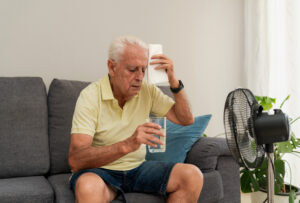 Heat-related illnesses can be very serious in seniors. On the milder end is heat exhaustion, which occurs when your body loses excess water and salt, typically through sweating. If not treated or taken seriously, this can turn into heat stroke, which is a serious medical emergency that occurs when your body is unable to control its internal temperature.
Heat Exhaustion
Symptoms of heat exhaustion may include:
- Heavy sweating
- Dizziness or light-headedness
- Headache
- Nausea
- Muscle cramps
- Weakness or fatigue
If these symptoms occur:
- Move to a cooler location.
- Drink water or a sports drink (or any beverage with electrolytes).
- Rest and loosen clothing.
- Seek medical attention if symptoms worsen or do not improve.
Heat Stroke
Symptoms of heat stroke may include:
- High body temperature
- Confusion or disorientation
- Rapid pulse
- Hot, dry skin or excessive sweating
- Loss of consciousness
If these symptoms occur:
- Call 911 immediately.
- Move the person to a cool place and attempt to lower their body temperature with cool cloths or a fan, while waiting for emergency assistance.
6. Check on Family, Friends, and Neighbours

During periods of extreme heat, regular check-ins can make a significant difference. Check in on seniors who live alone and ensure they have access to water, cooling, and assistance if needed.
Summer meant to be enjoyed, and with a few simple precautions, you can make the most of the season safely. While warm weather brings opportunities for outdoor activities, social connections, and exercise, it also brings increased risks for seniors. Staying hydrated, dressing appropriately, avoiding excessive heat exposure, and protecting skin from the sun can significantly reduce the risk of heat-related illness. By planning ahead and listening to your body, you can continue to enjoy all that summer has to offer while staying healthy, comfortable, and safe.
For heat and sun related updates, you can monitor official forecasts and alerts at Environment Canada – Toronto Alerts.